
Top Signs Indicating It's Time for Heating System Repair

Warning signs include strange banging or squealing noises, uneven room temperatures, rising energy bills, frequent cycling, and a pilot light burning yellow instead of blue, common answers to the question, What Are the Signs That Indicate I Need Heating Repair for My System? Furnaces, boilers, and heat pumps all show these symptoms before larger failures occur. Action Heating & Cooling provides professional heating repair services in Southeast Michigan.
Why Do Small Heating Problems Escalate Quickly?
Minor heating issues rarely stay minor for long. A furnace, boiler, or heat pump operates as a connected system, so one strained component pulls extra load onto the parts around it. Within days, a small mechanical hiccup can snowball into a full system failure, leaving homeowners in Olympia without reliable heat during the coldest stretch of the year.
Delayed attention is usually the culprit. Signs that a heating system needs repair—strange noises, uneven heating, or rising energy bills—often get dismissed because the unit still technically runs. That false sense of security is exactly how small headaches turn into expensive ones.
Why does ignoring a minor heating issue cost more later?
Every part of a heating system depends on the others working correctly. A worn belt or dirty filter forces the blower motor to work harder. That added strain shortens the lifespan of components that would otherwise last for years. Catching the problem early, before it compounds, keeps repair costs contained.
Action Heating & Cooling's professional services restore peace of mind. Quick, targeted repairs address the root cause rather than masking symptoms.
What keeps a heating system running smoothly long-term?
Custom solutions matched to the specific system, paired with technicians who understand furnaces, boilers, and heat pumps alike, make the difference. That experienced expertise ensures consistent, uninterrupted heat throughout the season rather than a temporary fix.
Common escalation patterns include:
Unusual noises that signal worn belts or loose components
Inconsistent room temperatures pointing to airflow or ductwork trouble
Climbing utility bills reflecting reduced system efficiency
Frequent cycling that stresses the compressor or heat exchanger
What Noises Signal Your Heater Needs Repair?
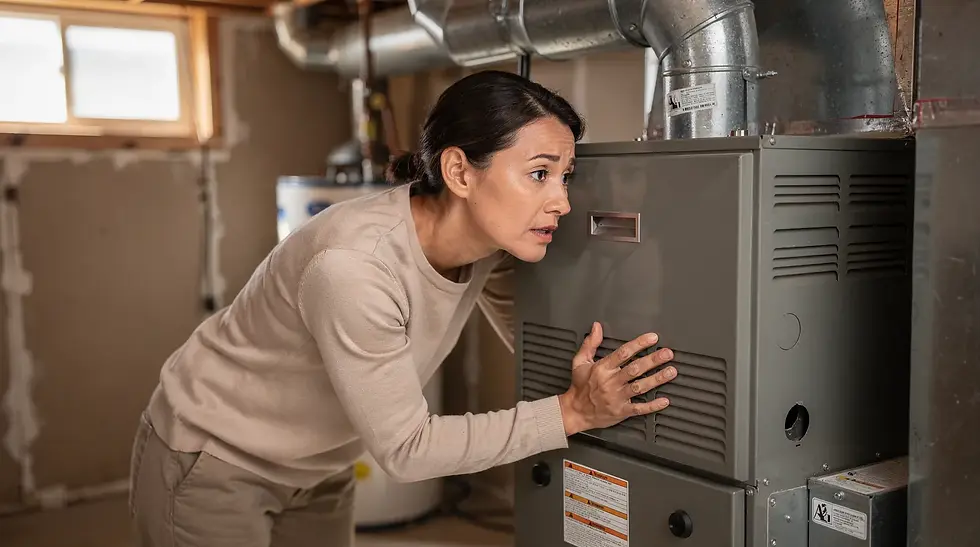
Banging, clanking, and metallic scraping sounds rank among the clearest signs that a heating system needs repair. These noises typically point to loose or broken internal components. Homeowners in Olympia should treat them as an urgent call for professional attention rather than background noise to tolerate through winter.
A furnace or heat pump humming quietly is normal. A furnace that suddenly bangs, rattles, or clanks is not. Loose parts inside the blower assembly or heat exchanger can shift out of place, striking metal housing with every cycle. Left unaddressed, that friction accelerates wear on components that are far more expensive to replace than to repair early.
Why does my furnace make a banging noise when it starts?
Startup banging often signals a delayed ignition. Gas builds up before igniting and creates a small combustion pop inside the burner chamber. It can also mean ductwork is expanding and contracting from temperature swings. Either way, the noise points to mechanical stress that worsens with each heating cycle.
What other sounds mean trouble?
Beyond banging, several sounds deserve equally fast attention:
Hissing — often linked to gas or air leaks near valves and connections
Squealing or whistling — usually a sign of belt wear or restricted airflow
Rattling — frequently traced to loose panels, screws, or ductwork connections
Action Heating & Cooling provides heating repair services in Southeast Michigan. Licensed technicians diagnose the source of unusual sounds and correct it before minor wear turns into a full system failure. Prompt diagnosis keeps heating systems running safely. Efficiently, protecting both comfort and the household budget through the coldest months of the year.
Could Rising Energy Bills Point to Heater Trouble?

Yes — a spike in monthly utility costs often signals a struggling heater long before total breakdown occurs. Strange sounds, uneven room temperatures, and climbing energy bills together form one of the clearest patterns that something inside the unit needs professional attention. Homeowners in Olympia who notice their heating costs creeping upward month after month, without a change in usage habits, should treat that trend as a warning rather than a coincidence.
A heater working harder than it should burns more fuel or electricity to produce the same amount of warmth. Worn components, clogged filters, and failing parts force the system into overdrive, and that inefficiency shows up directly on the bill.
Why Does an Inefficient Heater Cost More to Run?
Inefficiency stems from the system fighting against restrictions it shouldn't have to fight. Dirty coils, leaky ductwork, and aging motors all make a heater consume extra energy just to reach the thermostat's target temperature.
Can a Professional Inspection Lower Heating Costs?
A trained technician can pinpoint exactly where energy is being wasted. Action Heating & Cooling provides professional heating repair services. These audits, paired with the company's energy-efficient offerings and smart home integration, are built to sharpen a heating system's overall performance rather than mask the underlying issue.
Homeowners tracking their bills should watch for these red flags:
Utility costs rising a notable share or more without added usage
Uneven heating between rooms despite consistent thermostat settings
Unusual clanking, hissing, or rattling accompanying higher bills
Addressing these signs early protects both comfort and the household budget.
Is It Time to Repair or Replace?
Repair works best for isolated problems on equipment that still runs efficiently. Replacement becomes the wiser path once breakdowns pile up on an aging unit. The signs that indicate a need for heating repair often overlap with signals that a system is nearing the end of its useful life. A careful evaluation matters before spending another dollar.
Distinguishing a repair-worthy issue from a replacement-worthy one before a total failure protects household budgets. Homeowners who understand these differences save hundreds, sometimes thousands, compared with waiting until the system quits altogether.
Factor | Repair Usually Makes Sense | Replacement Usually Makes Sense |
Frequency of breakdowns | Occasional, isolated issue | Recurring problems each season |
Overall performance | Consistent heating output | Uneven or declining comfort |
Repair cost | Modest, one-time expense | Cost approaches new-system pricing |
Component condition | Minor wear on one part | Multiple aging components failing |
How Does a Technician Decide Between Repair and Replacement?
A trained technician inspects the full system rather than one symptom alone, checking for patterns that suggest deeper wear. That inspection separates a quick fix from a warning sign of larger, costlier failure ahead.
Why Does Working With an Experienced Team Matter for This Decision?
Copper + Cable Electric Co. brings expert technicians and a commitment to excellence to every heating evaluation, helping homeowners make confident, informed repair-or-replace decisions rather than guesswork. That dedication to quality carries through the entire process, from the first quote request to the after-service warranty check, giving homeowners assurance long after the technician leaves.
When Should You Call a Professional Technician?
Professional intervention becomes necessary the moment a heating system shows repeated malfunctions, unusual sounds, or inconsistent output. Homeowners in Olympia who delay that call often watch a minor fix turn into an expensive breakdown. Trustworthy expertise for electrical and HVAC needs matters most in these moments. A licensed technician can distinguish between a simple fix and a symptom of deeper trouble.
Copper + Cable Electric Co. maintains 24/7 HVAC emergency response for homeowners throughout Olympia, WA. Late-night furnace failures and weekend breakdowns rarely wait for convenient business hours. Round-the-clock availability means a qualified technician is reachable when the temperature drops and the system stops cooperating.
Is it worth calling a technician for a minor issue?
Small issues rarely stay small in a heating system. A minor short cycle or odd noise today can become a full system failure next week. Reliable heating and air services help homeowners catch developing issues early, which protects both comfort and the household budget over the long run.
What happens during a professional heating inspection?
A technician evaluates airflow, electrical connections, and combustion components to locate the root cause of the problem. This process improves the long-term performance of the system rather than masking symptoms temporarily.
Homeowners should schedule professional evaluation when facing any of the following:
Heating cycles that run constantly without reaching the set temperature
Unusual noises that return after a reset or filter change
Rooms that heat unevenly despite a properly set thermostat
Any burning smell, sparking sound, or visible damage near the unit
Waiting rarely saves money. Prompt professional attention protects the household, the equipment, and the budget alike.
FAQ
What are the most common signs a heating system needs repair?
Strange banging or squealing noises, uneven room temperatures, rising energy bills, frequent cycling, and a pilot light burning yellow instead of blue all signal trouble. Furnaces, boilers, and heat pumps show these symptoms before larger failures occur.
Why does a banging noise happen when the furnace starts?
Startup banging often signals delayed ignition. Gas builds up before igniting and creates a small combustion pop inside the burner chamber. Ductwork expanding and contracting from temperature swings can also cause this noise.
Why do small heating problems turn into bigger, costlier repairs?
A heating system operates as a connected unit. A strained component like a worn belt or dirty filter forces the blower motor to work harder. This added strain shortens the lifespan of other parts, compounding the damage quickly.
Conclusion
In closing, recognizing the warning signs of a failing heating system protects your home's comfort and safety while preventing costly emergency repairs. From unusual noises and inconsistent temperatures to rising energy bills and age-related decline, these indicators demand prompt professional attention. Our licensed technicians stand ready to diagnose and resolve heating issues efficiently, ensuring your system operates reliably through every season. Don't wait for a complete breakdown—contact us today for expert assessment and dependable solutions.


Comments